Moonj Grass Handicrafts of the Tharu Tribe — Heritage and Empowerment
Introduction
Moonj grass weaving is a traditional craft of the Tharu tribe, rooted in harmony with nature and cultural identity. Known for eco-friendly baskets, bags, and household items, moonj weaving represents resilience and artistry. Today, artisans like Arti Rana are reviving this heritage, empowering women, and connecting rural communities to modern markets.
Craft Tradition
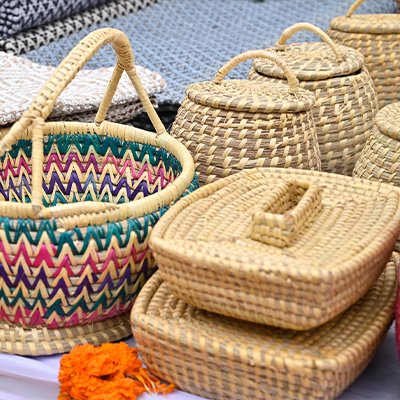
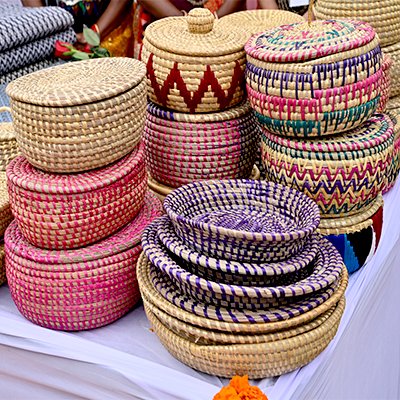
Moonj grass, harvested from plains and forests, is woven into durable products using traditional techniques. The craft involves creativity, patience, and cultural storytelling. Designs range from simple baskets to intricate flower pots and modern bags.
This eco-friendly craft preserves natural resources while offering sustainable alternatives to plastic.
Cultural Significance
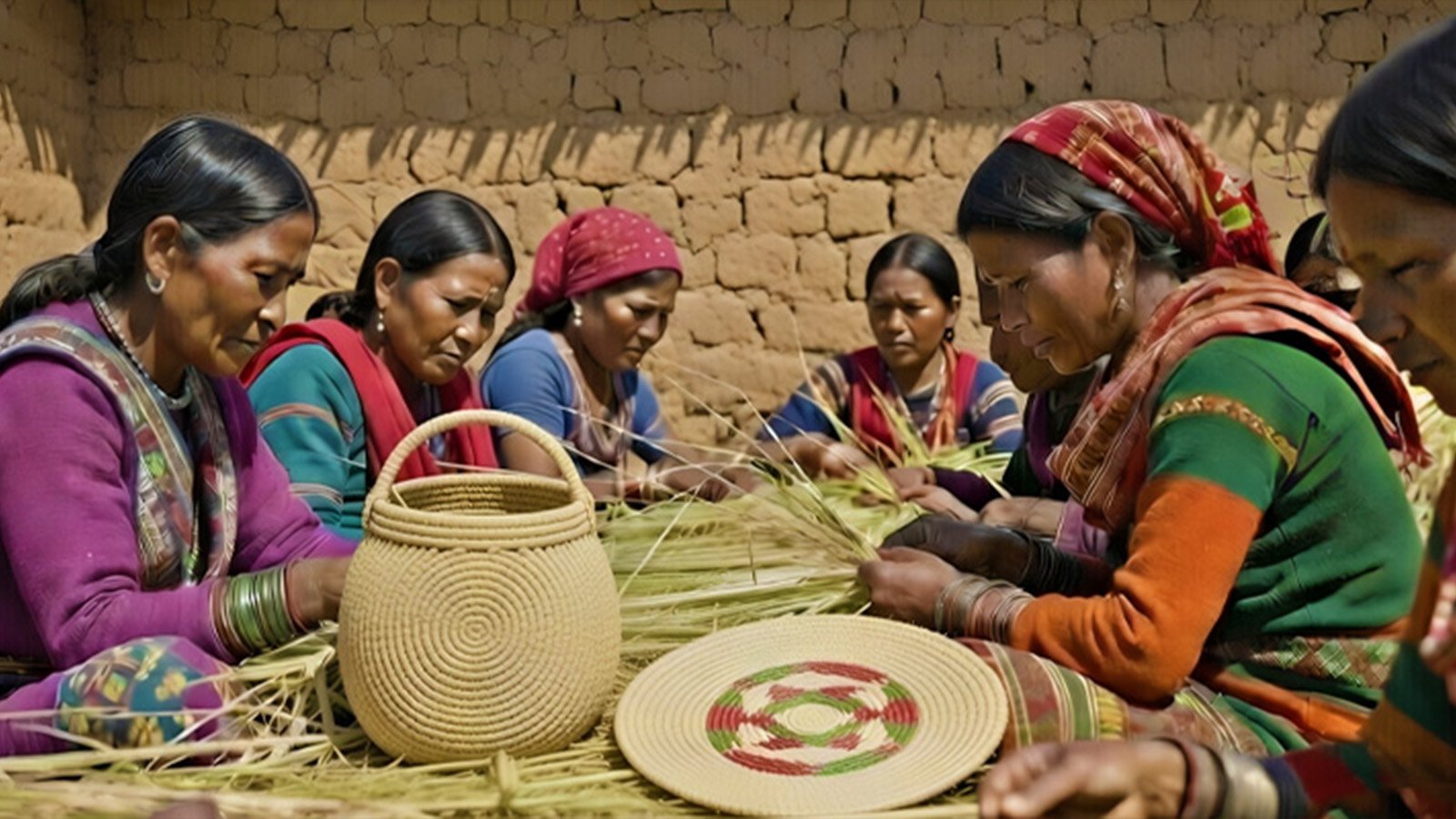
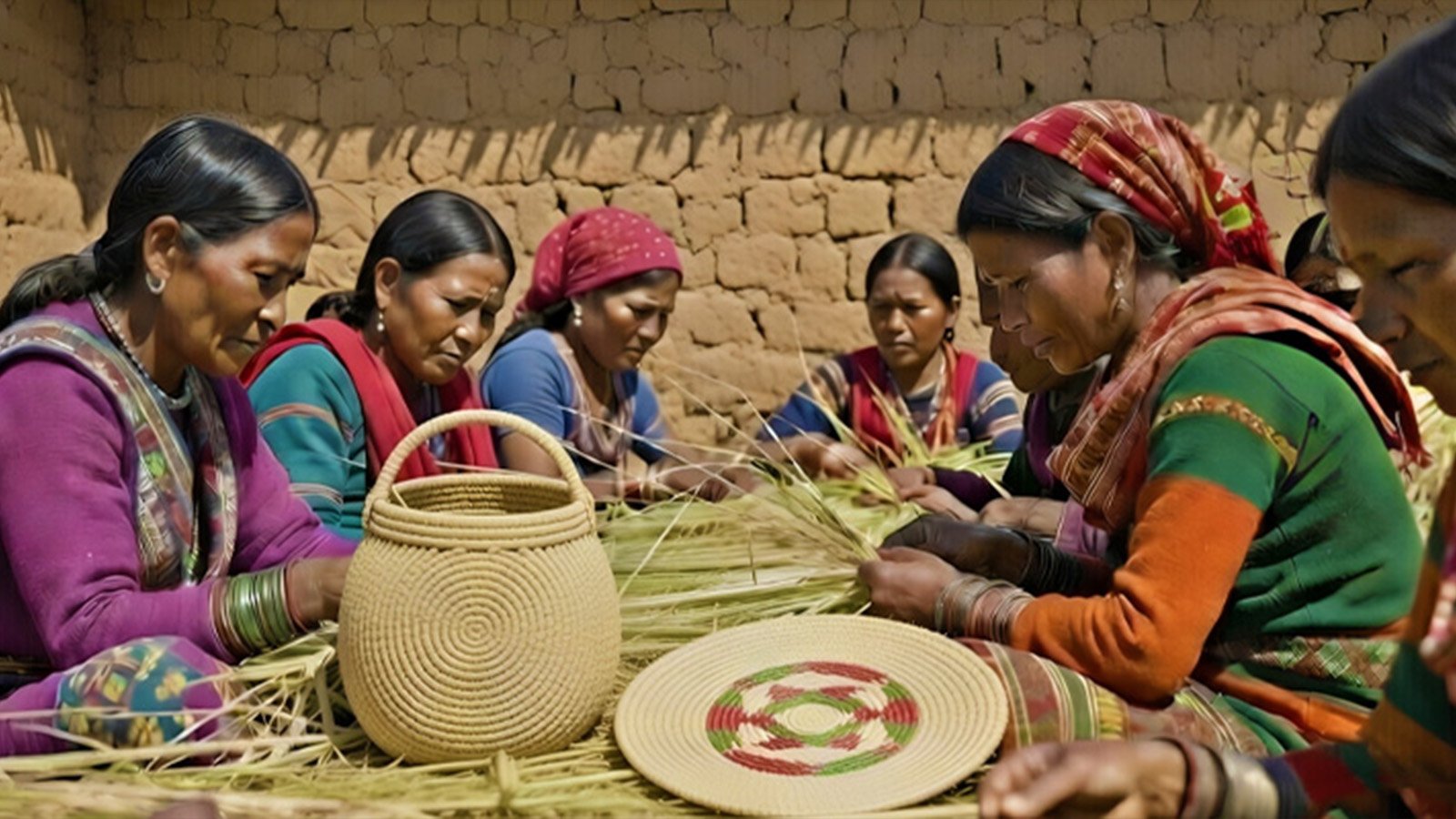
Moonj weaving is more than a livelihood — it is a cultural practice passed down through generations. Women gather in courtyards to weave, share stories, and strengthen community bonds. Products are used in households, festivals, and rural tourism activities, symbolizing tradition and sustainability.
Image suggestion: Tharu women weaving together in a village courtyard.
Revival and Recognition
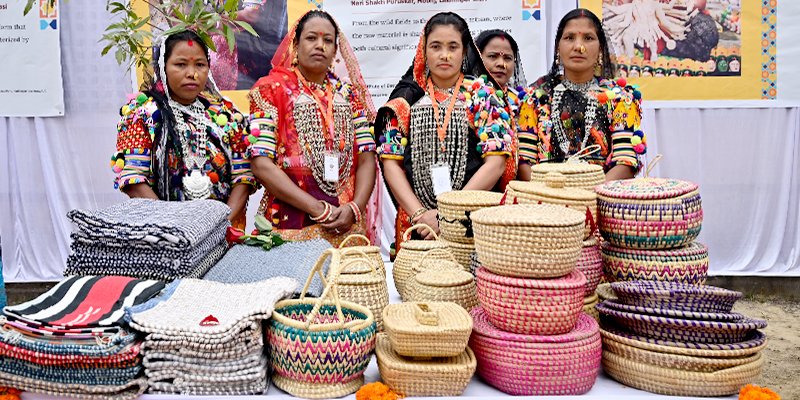
Moonj weaving faced challenges from modernization and declining demand. However, initiatives like UPIDR workshops, Mon Ami Foundation’s design interventions, and Nature Bazaar exhibitions have revived interest.
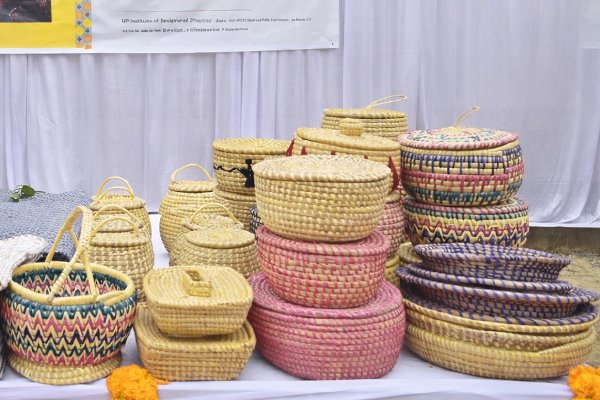
Artisans like Arti Rana have introduced modern designs, colors, and finishing, creating ranges like The Terai Collection. Recognition through awards and showcases has boosted visibility and demand.
Image suggestion: Modern moonj products displayed at exhibition.
Community Empowerment
Moonj weaving has transformed lives across Tharu villages:
- Groups of 800+ to 10,000 women now earn steady incomes.
- Monthly earnings of ₹10,000–12,000 provide financial independence.
- Women gain respect, decision-making roles, and pride in preserving heritage.
This empowerment aligns with Vocal for Local and Atmanirbhar Bharat campaigns, making moonj weaving a symbol of self-reliance and cultural preservation.
Future of Moonj Crafts
The future lies in balancing tradition with innovation. With design interventions, online platforms, and rural tourism, moonj crafts can reach global audiences. Continued support from government schemes and conscious consumers will ensure this eco-friendly heritage thrives.
Conclusion
Moonj grass handicrafts of the Tharu tribe are living heritage, combining sustainability, empowerment, and cultural identity. From village courtyards to international exhibitions, this craft continues to inspire and uplift communities.
Call to Action: Explore authentic moonj grass products from Tharu artisans on our Shop Page and help preserve this eco-friendly tradition.